
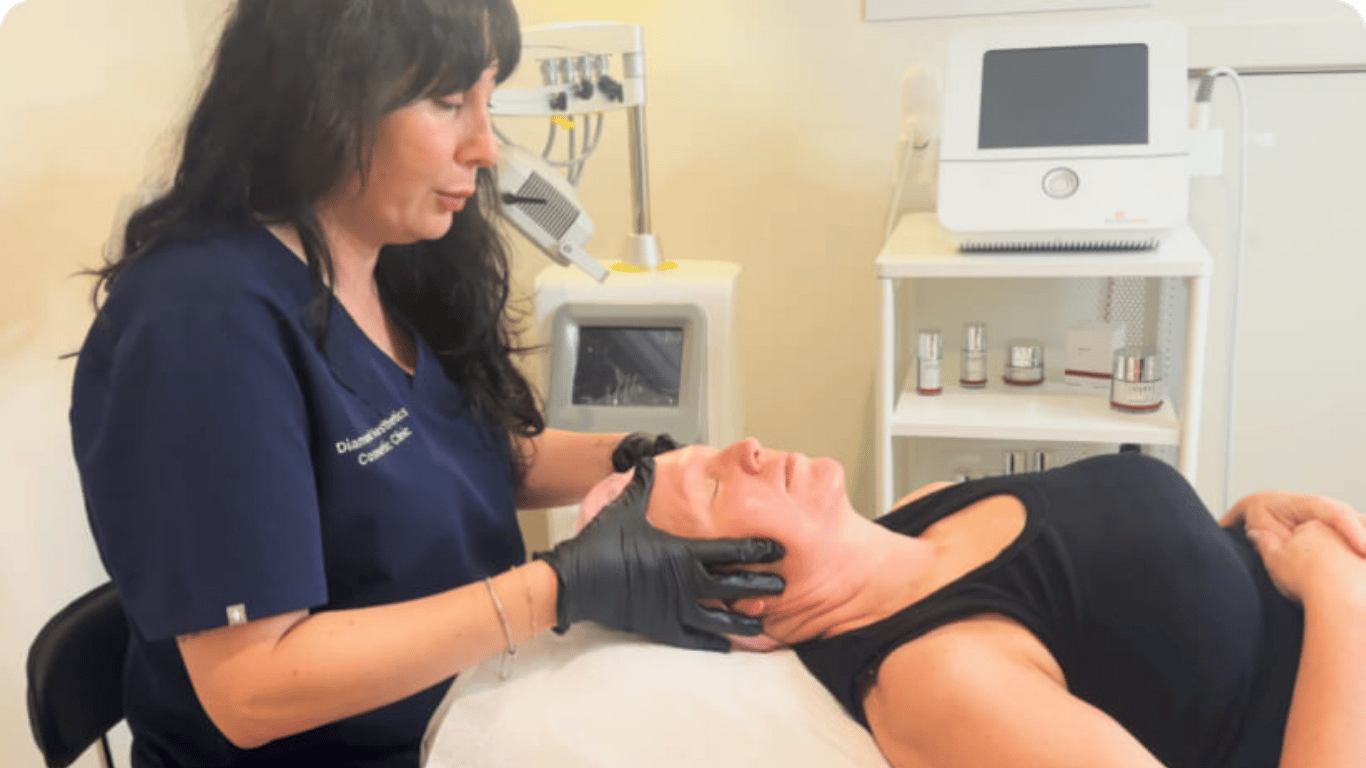
Chemical peels are commonly chosen for concerns like fine lines and pigmentation. Different types of peels are available, and each varies in strength and depth.
In this article, we explore how a chemical peel works and what to expect from your treatment.
What Is a Chemical Peel?
A chemical peel is a professional skin treatment used to exfoliate the skin in a controlled way. It involves applying a carefully selected chemical solution to the skin.
This solution works by gently exfoliating the outer layers of the skin. As a result, the skin may appear smoother and more even as it recovers.
As the old skin is removed, newer skin may appear smoother and more even in tone. It may also look brighter and more refreshed. The process also supports the skin’s natural renewal cycle. Over time, this may contribute to a more refined and balanced skin appearance.
Chemical peels are commonly used on the face, neck, and hands. Different types of chemical peels are available, ranging from superficial to deeper treatments. Because of this, each peel is selected based on your specific skin concerns and goals.
At Diamond Aesthetics, professional chemical peels are selected based on your skin needs. A personalised consultation helps determine the most suitable approach for your skin.
Types of Chemical Peels
At Diamond Aesthetics in Sydney, Australia, we offer a range of professional chemical peels and facial treatments. Each option is selected based on your skin type, concerns, and treatment goals.
Because every skin is different, a personalised consultation is essential before choosing a treatment. This ensures the most suitable approach for your skin.
1. Synergie Anti-Ageing, Brightening and Problem Skin Peel
This peel is used for several common skin concerns. For example, it may be considered for dull-looking skin, uneven tone, and acne-prone skin. It may also support skin renewal and smoother skin texture over time.
2. Synergie Signature Facial and Mask Therapy
This is a non-peel facial treatment designed to support skin hydration and comfort. It focuses on nourishing the skin and refreshing overall skin appearance. Therefore, it may suit people seeking a gentler professional skin treatment.
3. Aspect Dr Anti-Ageing Peel
This peel is available in different strengths, including 30%, 40%, and 60%. Because of this, treatment selection should be guided by professional assessment. It may assist with skin clarity, texture, and general skin maintenance.
4. PCA Brightening Peel
This peel may be considered for uneven skin tone and pigmentation concerns. In addition, it may support a brighter and more even-looking complexion. Suitability depends on your skin history, current skin condition, and practitioner advice.
5. Cosmedix Timeless Peel
This is a retinol-based peel often discussed for more resilient skin types. It may be used in professional skin programs where deeper exfoliation is appropriate. However, not all skin types tolerate retinol-based treatments in the same way.
6. Mesoestetic Energy C Professional Facial Treatment
This facial treatment focuses on skin brightness and overall skin vitality. It may be considered for skin that appears tired or uneven in tone. In some cases, it may also support a refreshed and healthier-looking complexion.
7. Mesoestetic Stem Cell Professional Facial Treatment
This professional facial is designed to support skin nourishment and maintenance. It may be included in a personalised skin program for ongoing skin care. Additionally, it may help support overall skin comfort and appearance.
Before, During, and After a Chemical Peel
Understanding what happens before and after a chemical peel is essential. It helps you prepare properly and support your skin throughout the treatment process.
Before a Chemical Peel
Before treatment, your practitioner may review your skin history and current routine. They may also ask about medications, sensitivities, and previous skin treatments. This step helps identify whether a peel is appropriate for you.
In some cases, you may need to prepare your skin beforehand. For example, sun exposure may need to be reduced before treatment. Certain active skincare products may also need to be paused. Preparation advice should always follow professional guidance.
During the Treatment
During the procedure, the skin is first cleansed carefully. Next, a chemical solution is applied to the treatment area. You may feel warmth, tingling, or stinging for a short time. Then, the solution is removed or neutralised as clinically required.
The exact process depends on the type and depth of peel used. Light, medium, and deeper peels affect different skin layers. Therefore, treatment experience and recovery time can differ between patients.
After a Chemical Peel
After treatment, the skin may look red or feel tight. Depending on the peel, flaking or peeling may also occur. Some people notice mild changes, while others need more recovery time. For this reason, aftercare instructions should be followed closely.
Sun protection is especially important after a chemical peel. Your practitioner may also recommend moisturising and avoiding certain products. In some cases, makeup use may need to be delayed. Aftercare advice depends on peel depth and individual skin response.
What Changes May Be Noticed Over Time?
As the skin renews, gradual improvements in texture and tone may be noticed. The skin may appear smoother, brighter, and more refined over time. Chemical peels may also help improve the appearance of fine lines, visible pigmentation, and uneven skin tone.
Are Chemical Peels Suitable for All Skin Types?
Chemical peels are not automatically suitable for every skin type. However, some superficial peels may be considered across different skin types. Even so, treatment suitability depends on your skin history and current skin condition.
People with darker skin tones may need extra caution. This is because some peels can increase the risk of post-inflammatory hyperpigmentation. As a result, treatment choice should be based on careful professional assessment.
A chemical peel may also be unsuitable in some situations. For example, caution may be needed if you scar easily. It may also be unsuitable if your skin is highly sensitive. In addition, recent sun exposure can affect treatment planning. Some medications or skin conditions may also increase the risk of complications.
Therefore, a professional consultation is important before any peel is considered. Your practitioner should assess your skin type, concerns, and relevant medical history.
Chemical Peel Treatment in Sydney, Australia
Choosing the right chemical peel depends on your skin type, concerns, and lifestyle. Because different peels vary in strength, not every option will suit everyone.
At Diamond Aesthetics in Parramatta, Sydney, we take a personalised approach to every treatment. Your practitioner will assess your skin, discuss your concerns, and explain suitable options. We focus on creating treatment plans that align with your skin type, concerns, and overall skin goals. Safety, comfort, and clear communication are prioritised at every stage. If you are considering a chemical peel in Sydney, Australia, book a consultation with our team.
Frequently Asked Questions
How do I know which peel or facial is right for me?
The most suitable peel or facial depends on your skin type, concerns, and treatment goals. During a consultation, your practitioner will assess your skin and medical history.
Is there any downtime after a peel?
Downtime can vary depending on the type and strength of the peel. Some individuals may experience mild redness or light peeling for a short period. These effects usually settle within a few hours to several days. Your practitioner will provide aftercare guidance to support your recovery.
Can skin peels be combined with other treatments?
Yes, skin peels may be combined with other treatments as part of a tailored plan. These may include LED light therapy, microneedling, or microdermabrasion.
How often can I have this treatment?
The frequency of treatments depends on the type of peel and your skin condition. Some peels may be recommended as part of a treatment series.

0 Comments