
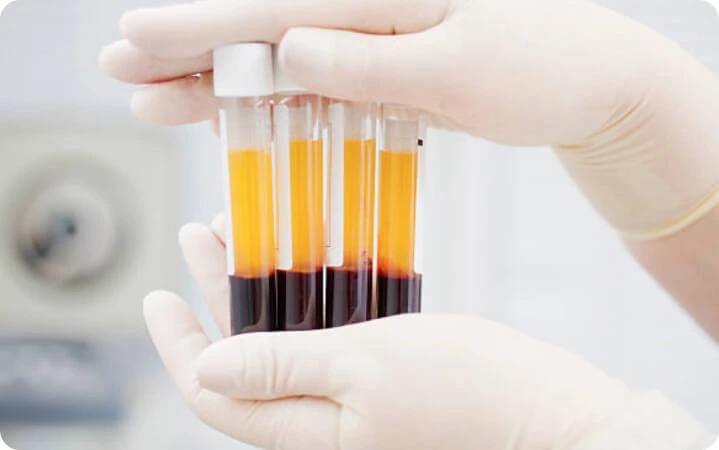
Platelet-Rich Plasma (PRP) and Platelet-Rich Fibrin (PRF) are often confused, and the reason is simple: both are prepared from a small sample of your own blood. When comparing PRF vs PRP, the key difference is structure. PRP is a liquid concentrate of platelets suspended in plasma. PRF keeps a fibrin matrix that forms a gel and releases growth factors gradually.
That one difference affects how each treatment is prepared, its texture, the areas it is commonly considered for and how treatment plans are structured. This guide explains the key differences between PRP and PRF so you can go into a consultation well informed. Wondering which option is the right choice for you? . Your practitioner confirms which treatment, if any, suits your skin or scalp after a full assessment.
What Is PRP (Platelet-Rich Plasma)?
PRP (platelet-rich plasma) is a concentrate of platelets taken from your own blood and suspended in liquid plasma. It contains a higher concentration of platelets than normal circulating blood. Platelets carry growth factors, which are proteins involved in the body’s natural healing process.
To prepare PRP, the blood is collected with an anticoagulant (an anti-clotting agent) so it stays liquid. It is then spun in a centrifuge, which separates red blood cells from platelets and white blood cells. Because the blood comes from the same person who receives the treatment, PRP is described as autologous.
At Diamond Aesthetics, PRP is most commonly chosen to support 5 concerns:
- Skin texture and tone
- Fine lines
- Scalp health and hair strength
- Skin hydration
What Is PRF (Platelet-Rich Fibrin)?
PRF (platelet-rich fibrin) is a platelet concentrate that keeps fibrin, so it forms a gel rather than a liquid. Fibrin is a protein your blood makes when it clots naturally. It forms a fine, mesh-like network, called a fibrin matrix, that holds platelets and growth factors in place.
PRF is prepared similarly to PRP, with one important change: no anticoagulant is added. The blood is centrifuged within about 2 minutes of collection, which isolates the fibrin matrix. After centrifugation, the PRF matrix sits in the top layer of the tube. The Therapeutic Goods Administration (TGA) explains how PRP and PRF are regulated in Australia, including how each preparation is defined.
Because the fibrin matrix holds the growth factors, PRF offers a slower, more gradual release of growth factors than liquid PRP.
If you want to understand PRP in more detail, read our PRP treatment guide to learn how the treatment works, how it is prepared and what to expect during a session.
PRP vs PRF: The Key Differences
PRP and PRF differ in composition, preparation, texture, growth factor release and how each is used at Diamond Aesthetics. The table below compares them side by side.
| Feature | PRP (Platelet-Rich Plasma) | PRF (Platelet-Rich Fibrin) |
| Source | Your own blood | Your own blood |
| What it contains | Concentrated platelets and growth factors in liquid plasma | Platelets and growth factors held in a fibrin matrix |
| Preparation | Blood collected with an anticoagulant, then centrifuged to separate the platelet-rich layer | Blood collected without an anticoagulant and centrifuged within about 2 minutes, so fibrin forms naturally |
| Texture | Liquid | Gel-like |
| Growth factor release | Faster | Slower and more gradual |
| Main areas at Diamond Aesthetics | Skin texture and tone, fine lines, elasticity, scalp and hair, hydration | Under the eyes (tear trough) and smile lines (nasolabial folds) |
| Session time | Around 45–60 minutes | Around 30 minutes |
| Recommended course | Usually 4 sessions, 4-6 weeks apart | 3 sessions, about 4 weeks apart |
| Maintenance | Follow-ups may be advised every 6–12 months | Follow-ups may be advised every 6–12 months |
The preparation method explains most of these differences. PRP uses an anticoagulant, an anti-clotting agent that keeps the blood liquid during centrifugation. PRF uses no anticoagulant, so the blood begins to clot naturally and must be spun straight away. This natural clotting forms the fibrin matrix, which gives PRF its gel-like consistency and more gradual growth factor release.
Diamond Aesthetics uses the T-Lab System, which aims to improve the quality of the platelets and growth factors drawn from the blood.
Which Areas and Concerns Is Each Commonly Considered For?
PRP and PRF are commonly considered for similar skin and scalp concerns, with PRF mainly used in 2 facial areas, to address the volume loss.
PRP is commonly considered for:
- Skin texture and tone
- Fine lines
- Skin elasticity and firmness
- Scalp health and hair strength and growth
- Skin hydration
PRF is commonly considered for:
- Under the eyes (tear trough)
- Smile lines (nasolabial folds)
- Face and neck
- Scalp
- Hands
Both treatments are also considered for skin ageing, mild skin laxity, enlarged pores and uneven texture, and early signs of hair thinning. The treatment area and your goals guide which option is discussed.
Who Can Benefit From PRP and PRF Treatments?
PRP and PRF may be suitable for adults with specific skin or scalp concerns. People who commonly consider these treatments include:
- People noticing early signs of ageing or loss of firmness
- People with early hair thinning or scalp concerns
- Clients in their 30s and beyond looking for proactive skin maintenance
- People who prefer a treatment prepared from their own blood
Suitability is confirmed at consultation. Your practitioner assesses your skin or scalp, goals and overall health before recommending a treatment plan.
What to Expect: Session Time, Downtime and Number of Sessions
A PRP session takes around 45–60 minutes, while a PRF session takes around 30 minutes. Both involve little downtime, and most clients return to their usual daily activities the day after treatment.
| Detail | PRP | PRF |
| Session length | 45–60 minutes | Around 30 minutes |
| Typical course | 4 sessions | 3 sessions |
| Time between sessions | 4-6 weeks | About 4 weeks |
| Maintenance | Every 6–12 months, if advised | Every 6–12 months, if advised |
The number of sessions depends on your goals and skin condition. Results vary from person to person and depend on factors such as skin condition, age and the treatment area.
Possible Side Effects of PRP and PRF
Side effects of PRP and PRF are usually mild and temporary. Because both use your own blood, the risk of an allergic reaction is extremely low. Possible side effects include:
- Redness or slight swelling in the treated area
- Mild tenderness or sensitivity
- Occasional bruising, which typically settles within a few days
Good hygiene before and after treatment reduces the risk of infection. Your practitioner provides aftercare instructions to support a comfortable recovery.
PRP or PRF: How Is the Choice Made?
The choice between PRP and PRF can be made at your consultation. Neither treatment is superior in every case. Your practitioner assesses your skin or scalp, your goals and your health history, then recommend the option that suits your situation.
A consultation may also cover other approaches or a combination of treatments. For skin quality concerns, this can include Rejuran salmon DNA treatment. For concerns related to volume, your practitioner may discuss facial volume treatments. You can explore our Regenerative Treatments guide to learn more about the different treatment options available at Diamond Aesthetics and how they support skin rejuvenation and skin health.
Frequently Asked Questions
Is PRF better than PRP?
There is no better option, only a better fit for the concern being treated. They suit different goals. PRF forms a gel that releases growth factors gradually, which is why we mainly use it under the eyes and around the smile lines. PRP is a liquid concentrate suited to broader skin and scalp treatments, such as texture, fine lines, hydration and hair. Your practitioner recommends the right option for you after assessing your skin or scalp at your consultation.
Is PRF or PRP used for under the eyes?
At Diamond Aesthetics, PRP and PRF are both used for the under-eye (tear trough) area, for different reasons. PRP under the eyes is used to support skin firmness and texture, while PRF, with its gel-like fibrin matrix, is mainly used to address volume loss and hollowing. Which one suits you depends on whether your main concern is skin quality or volume, and your practitioner confirms this at your consultation.
PRP vs PRF for hair: what’s the difference?
Both PRP and PRF are injected into the scalp to support hair growth and help strengthen thinning hair. The difference is how the growth factors are delivered. PRP for hair is a liquid platelet concentrate, so its growth factors are released quickly. PRF for hair is also injected, then sets into a fibrin gel in the scalp that releases growth factors gradually over a longer period. Your practitioner recommends the option that suits your stage of hair thinning at your consultation.
How long do PRP and PRF results last?
Results vary from person to person. Changes may appear within a few weeks and continue to develop over time. Follow-up sessions may be advised every 6–12 months.
Do PRP and PRF hurt?
Discomfort with PRP and PRF is generally mild and short-lived, and we plan for it. For skin treatments, a strong numbing cream is applied before the injections. For scalp and hair treatments, where the skin is more sensitive, you can request a local anaesthetic nerve block to numb the scalp first and make the experience more comfortable.
Book a PRP or PRF Consultation in Parramatta
PRP vs PRF comes down to structure. PRP is a liquid platelet concentrate. PRF is a gel-like fibrin matrix that releases growth factors gradually. Both are prepared from your own blood, and both require a consultation to confirm suitability.
Diamond Aesthetics offers nurse-led PRP and PRF treatments in Parramatta at 1A Grose St, Parramatta NSW 2150. Book your consultation or call 02 9000 5611.

0 Comments